
Annual NIP Red Tie Luncheon Honors Legacy of Lieutenant General Vince Stewart
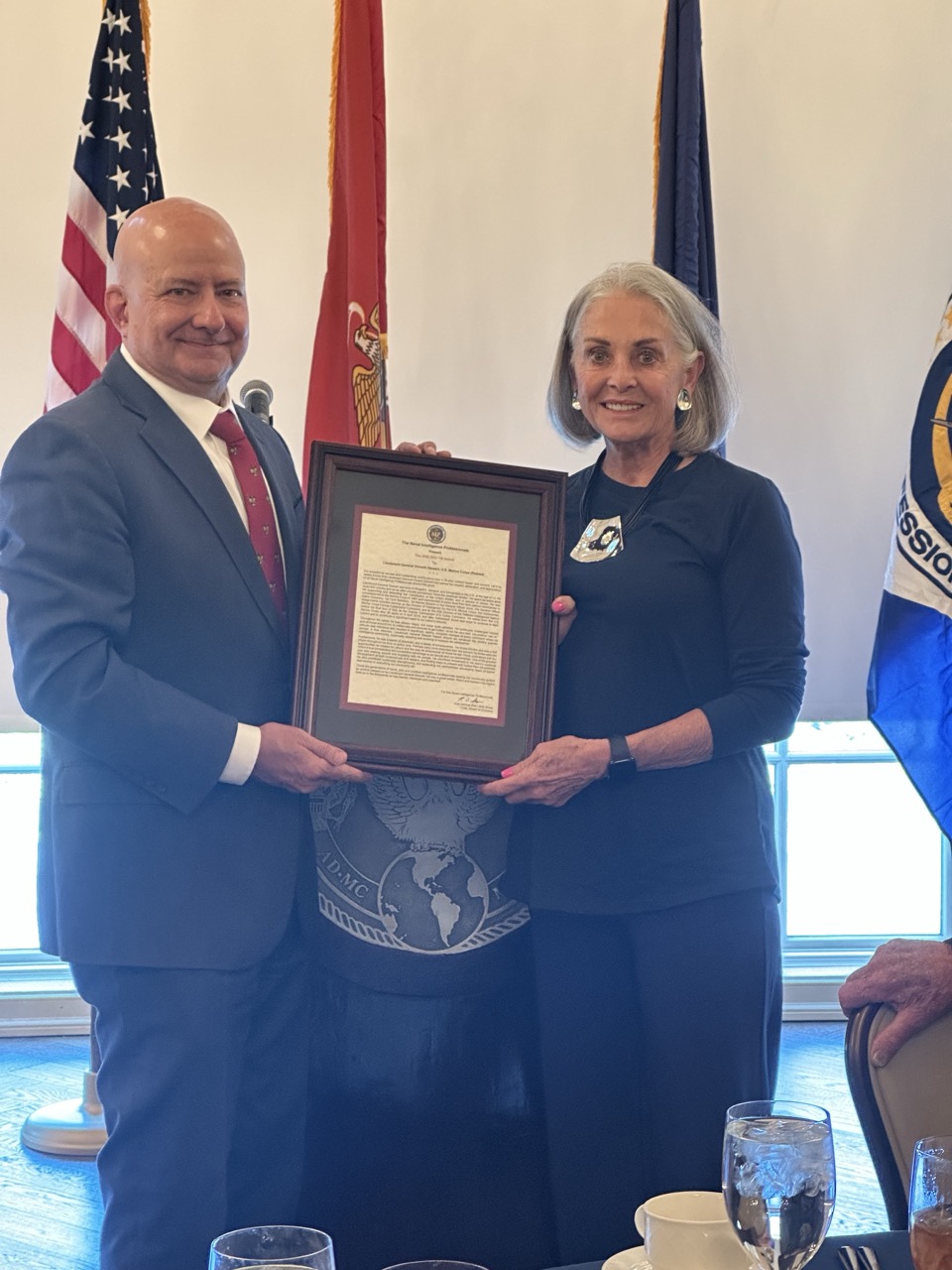
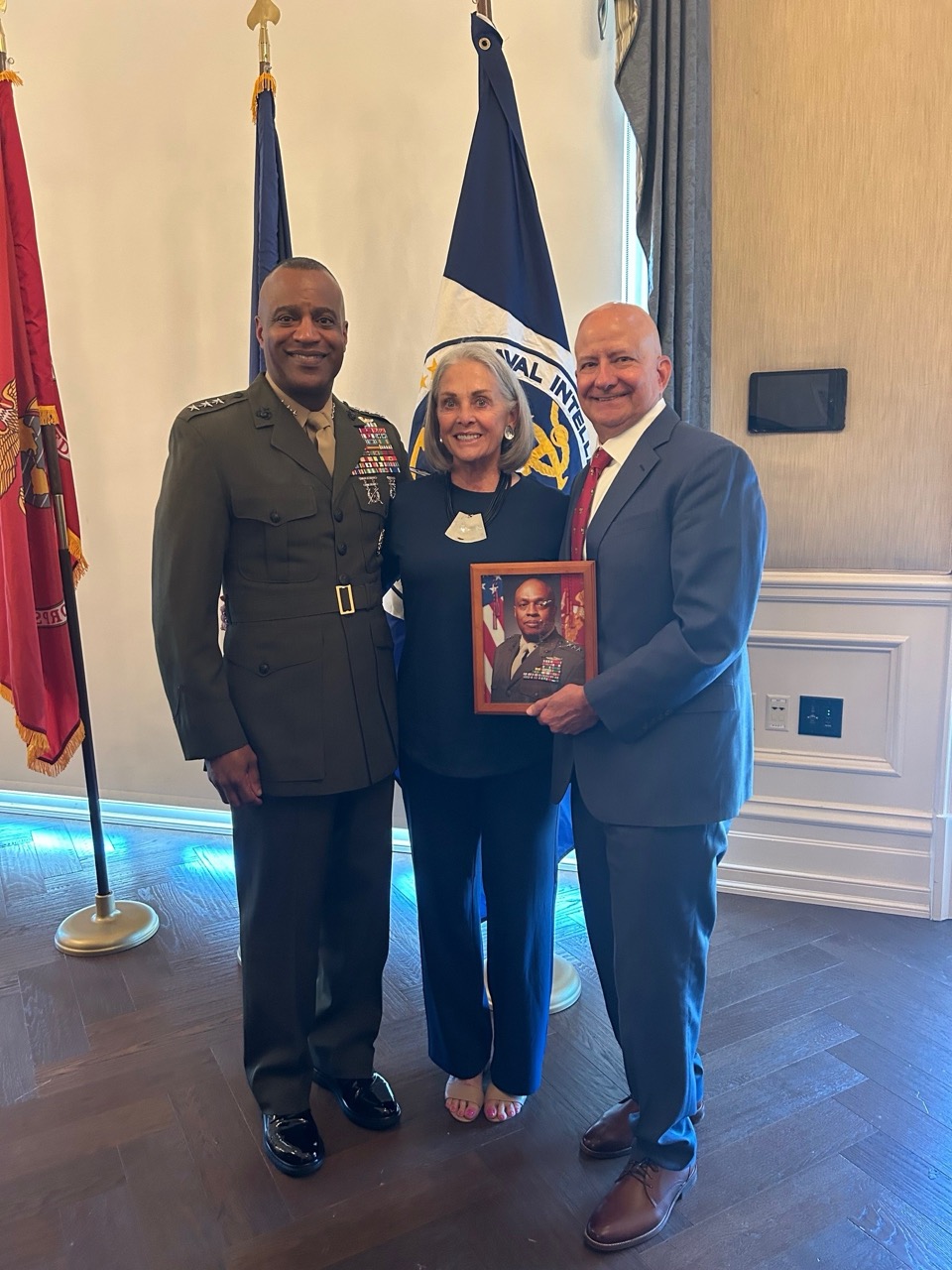
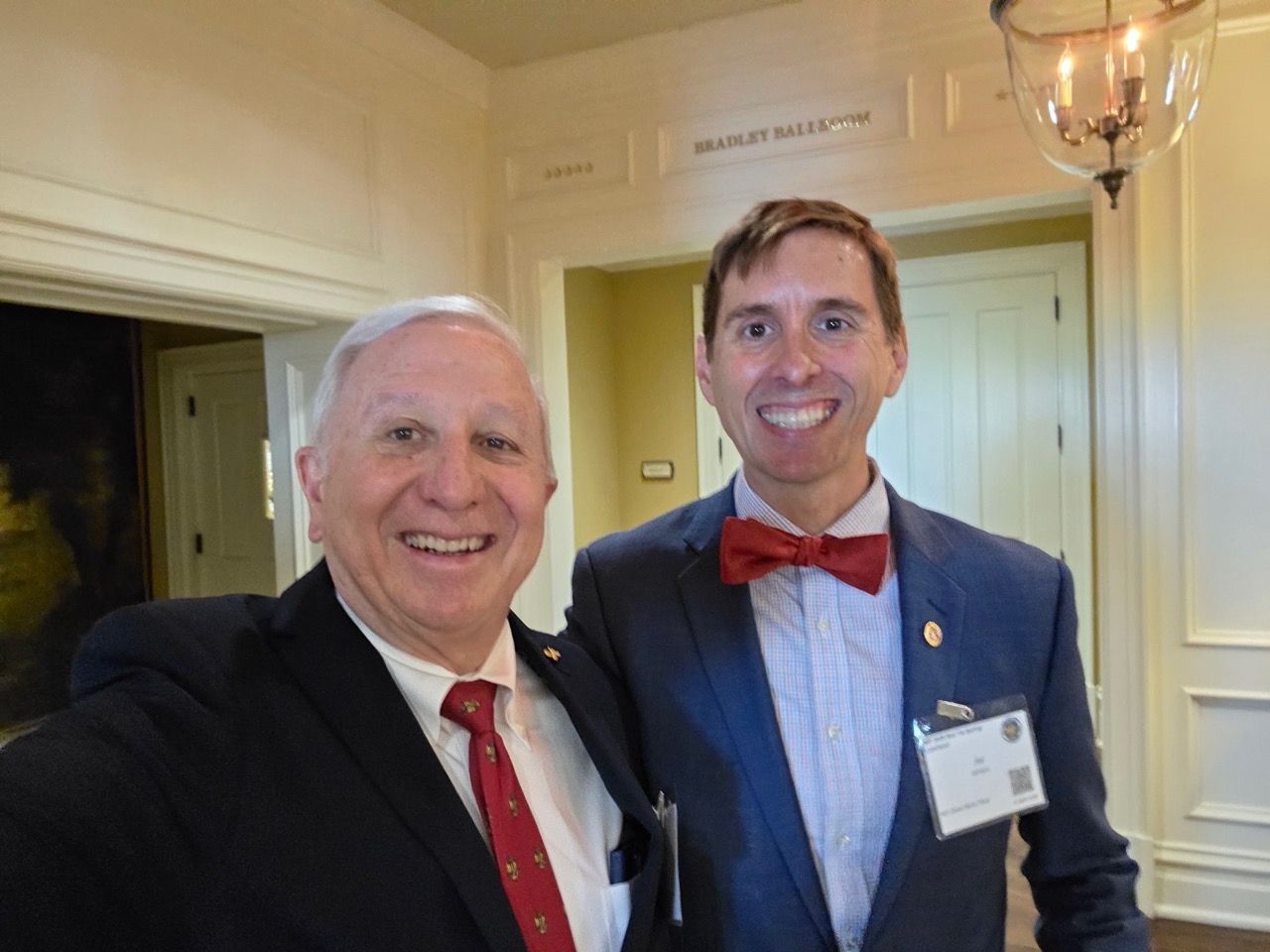
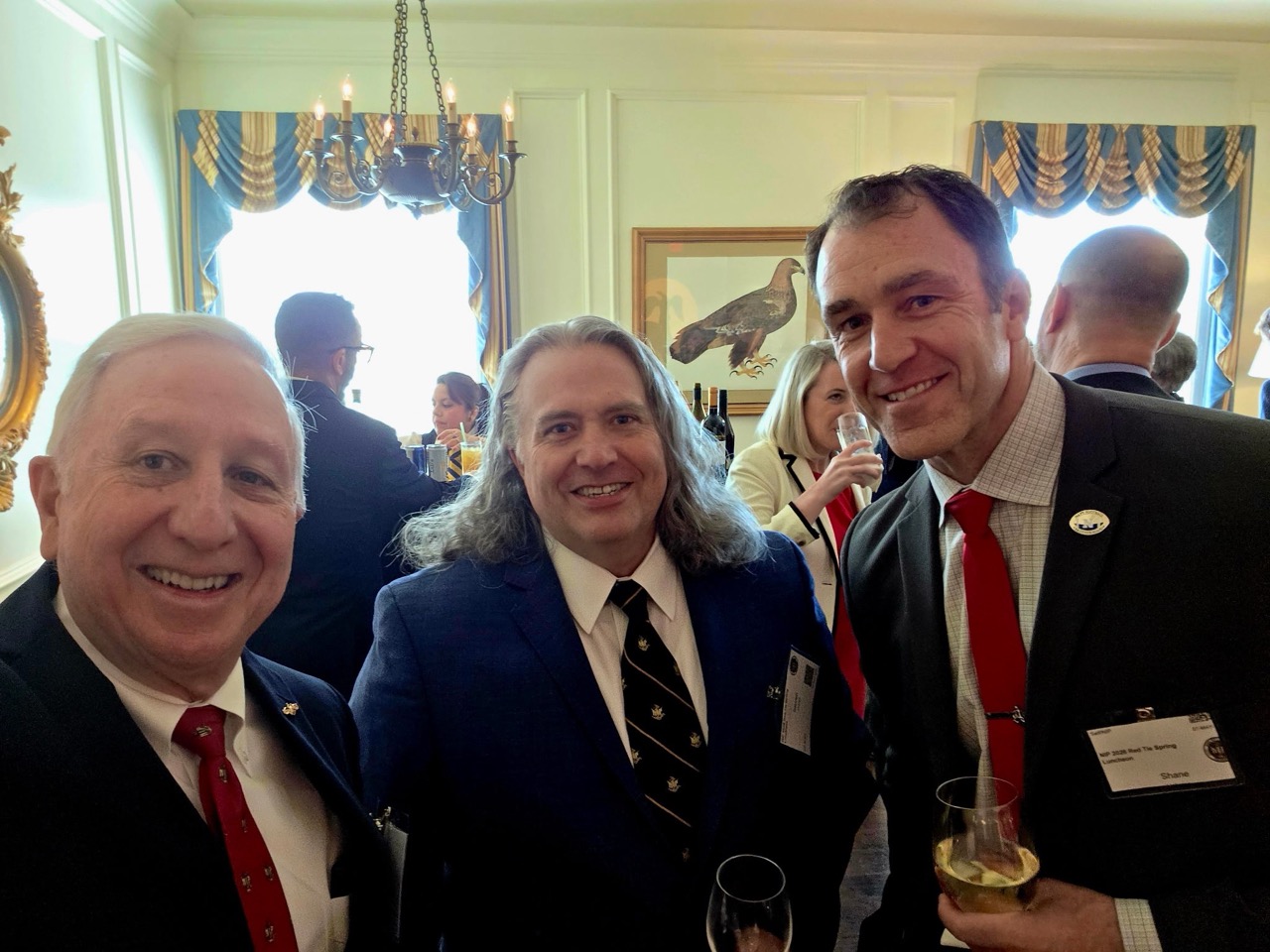
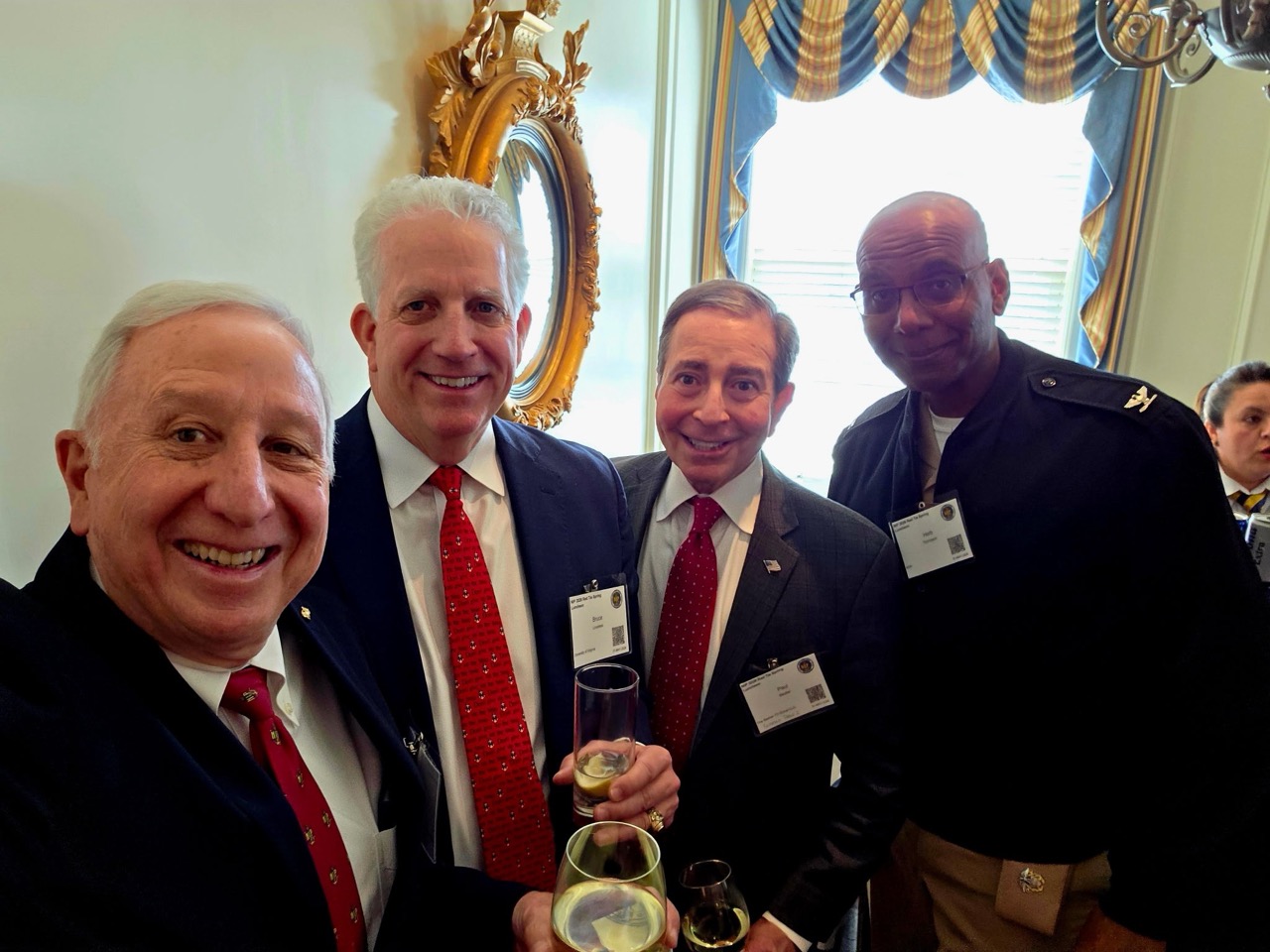
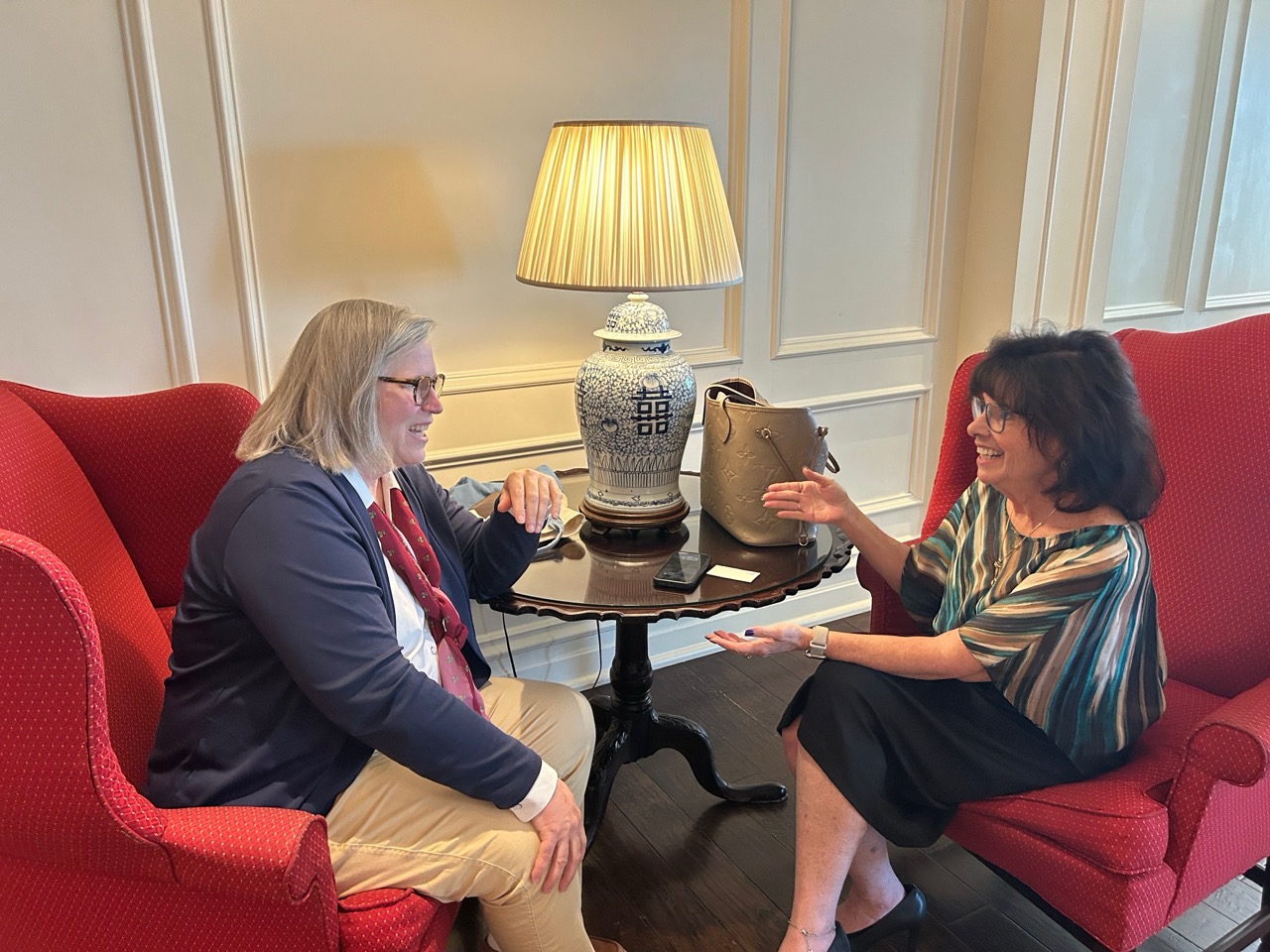
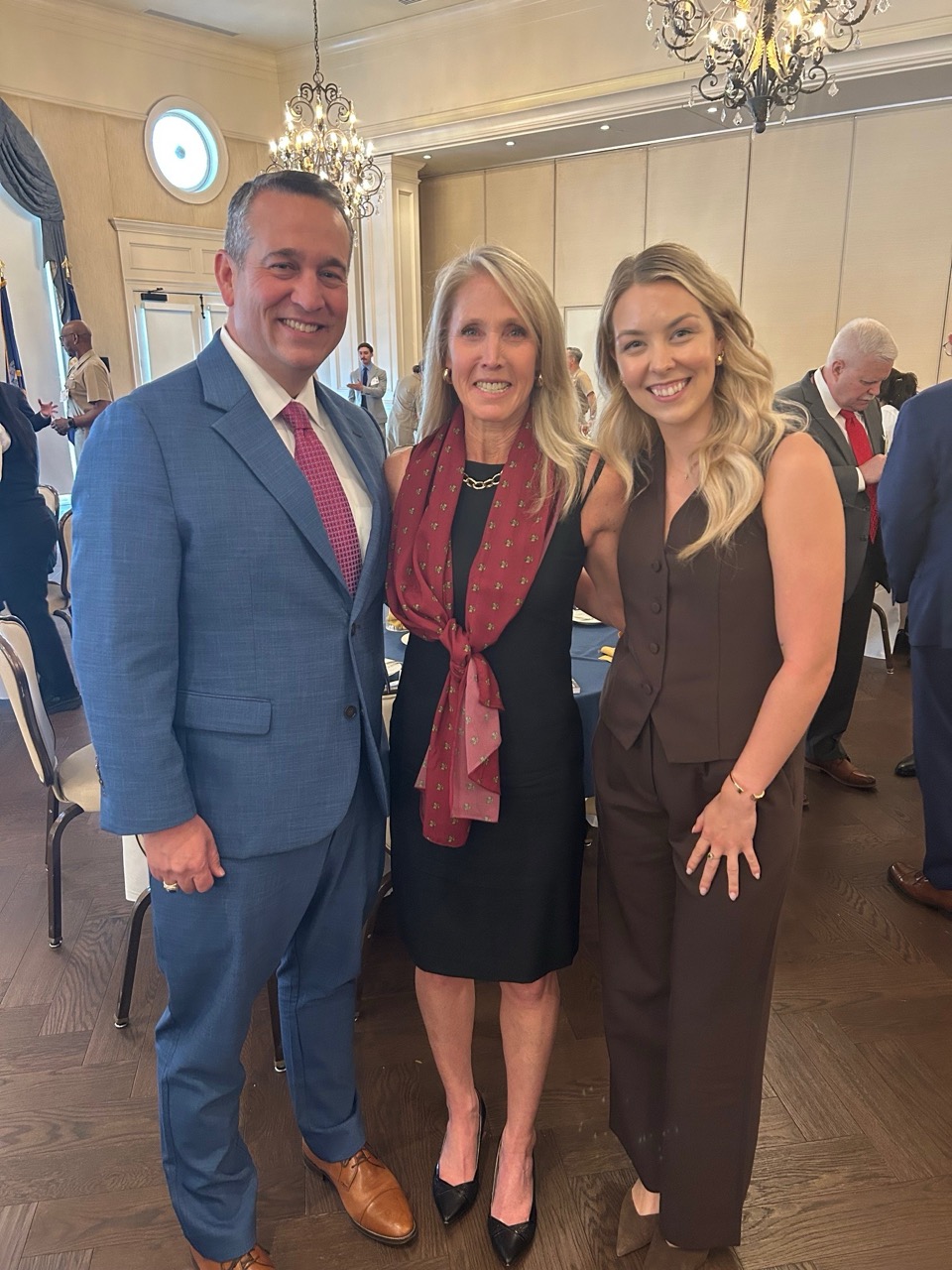
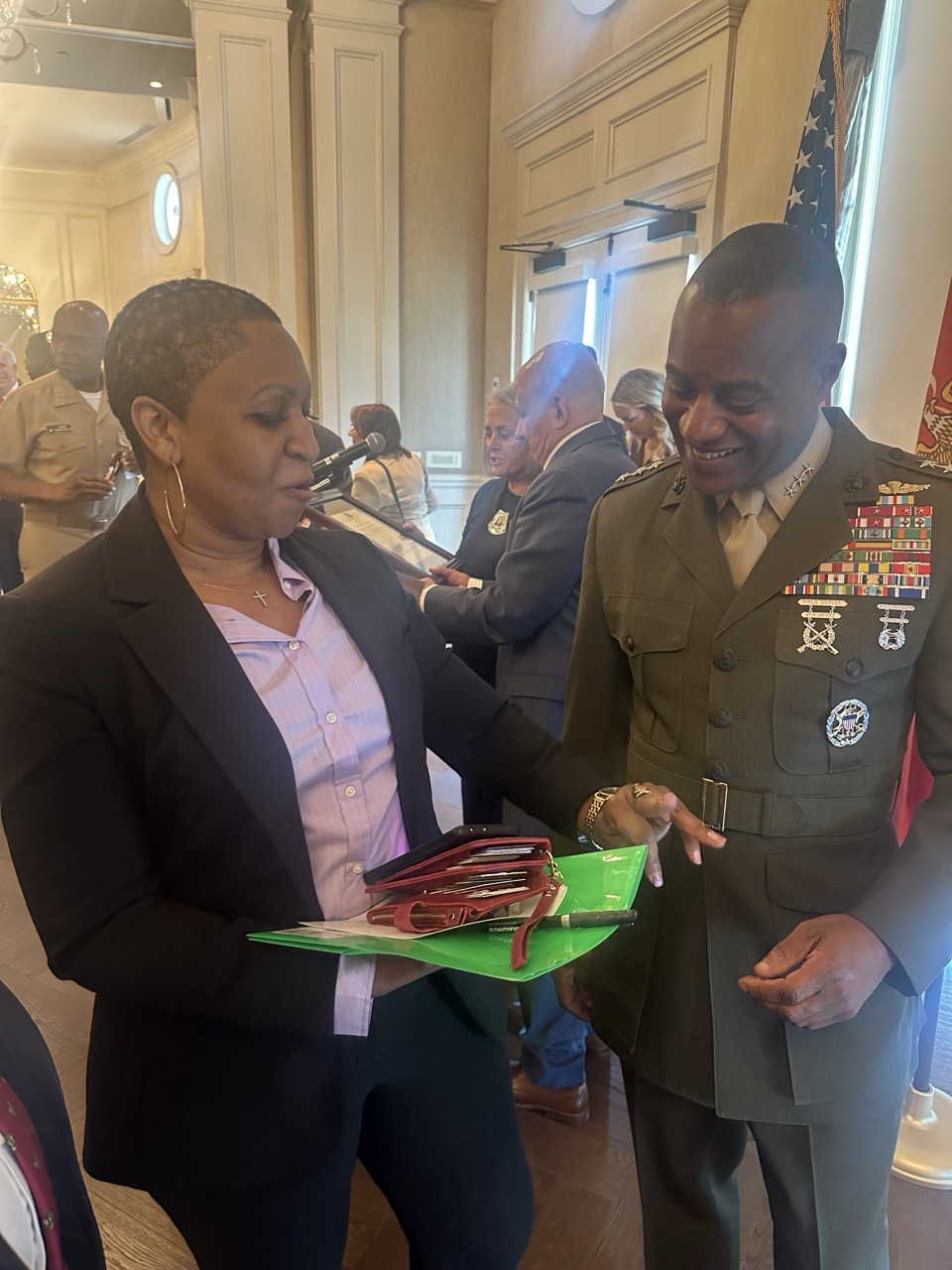
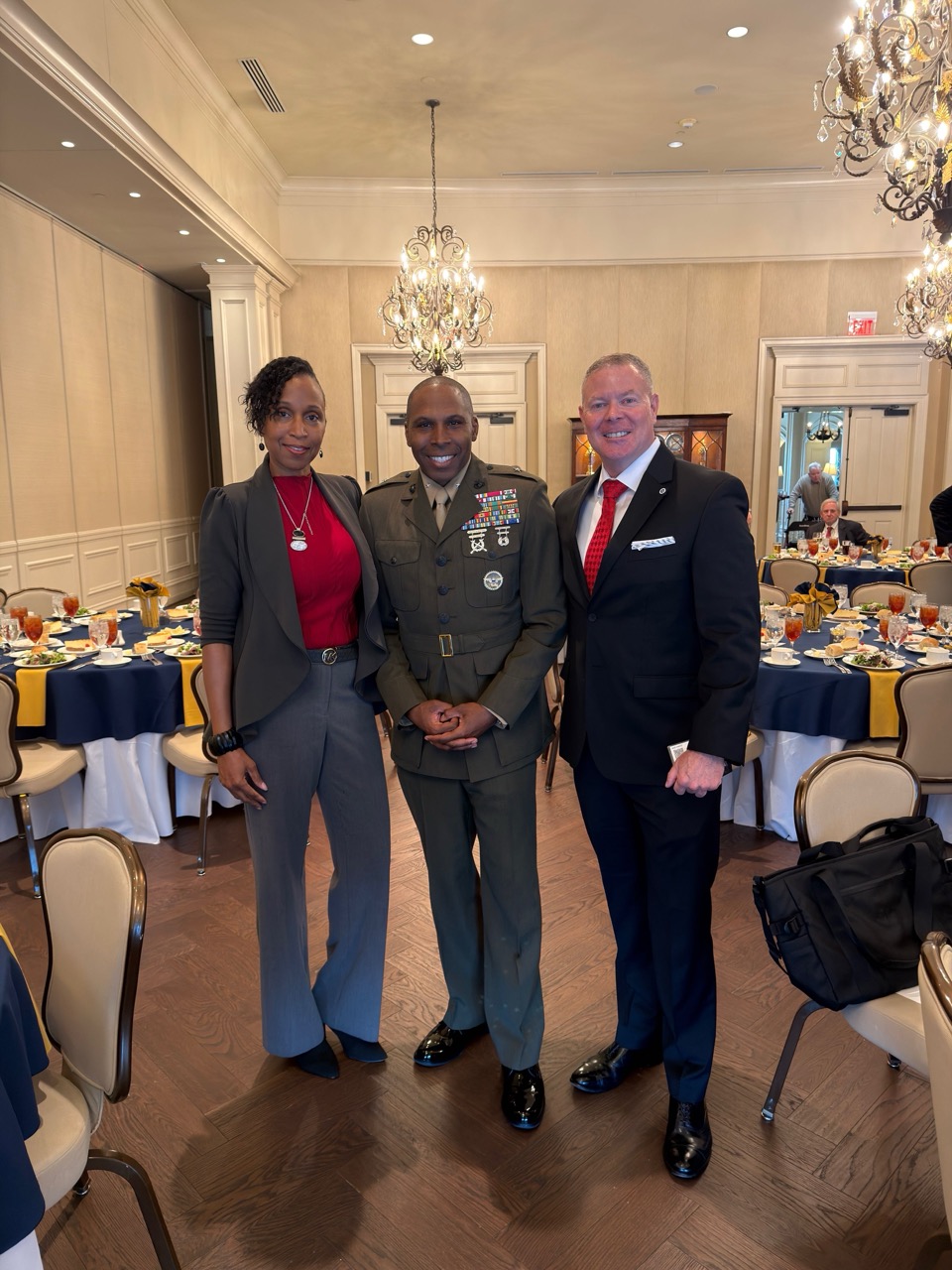
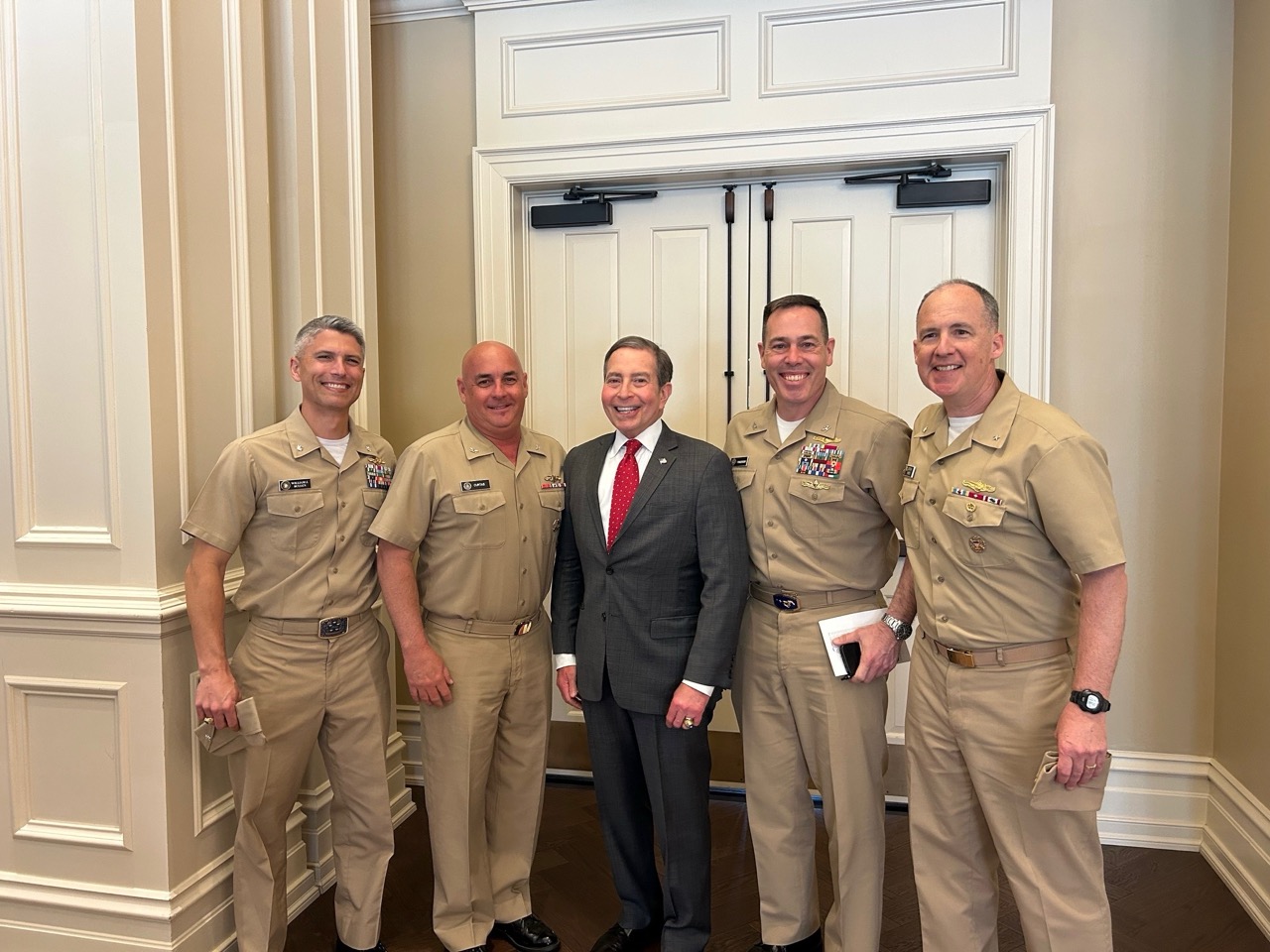
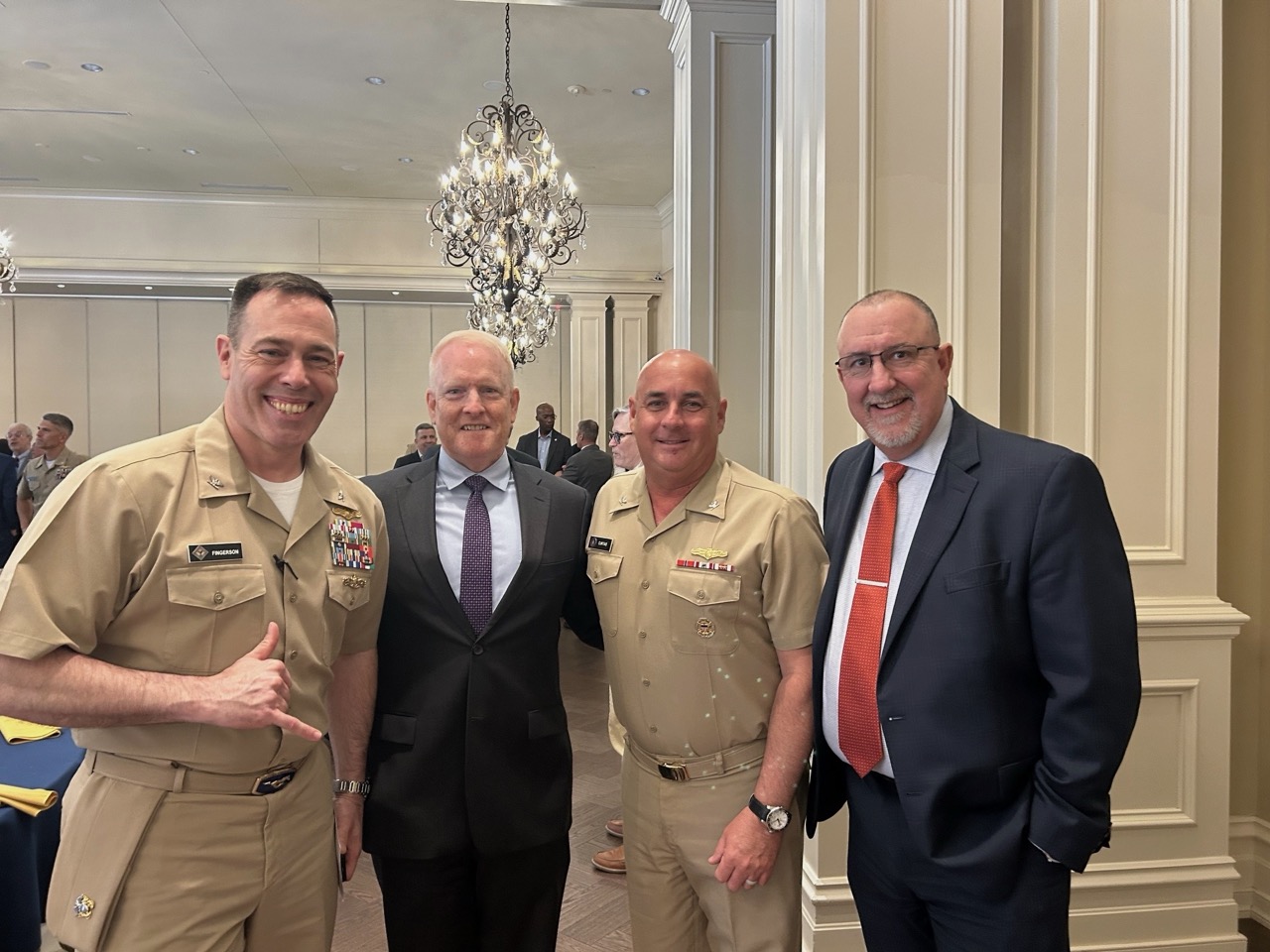
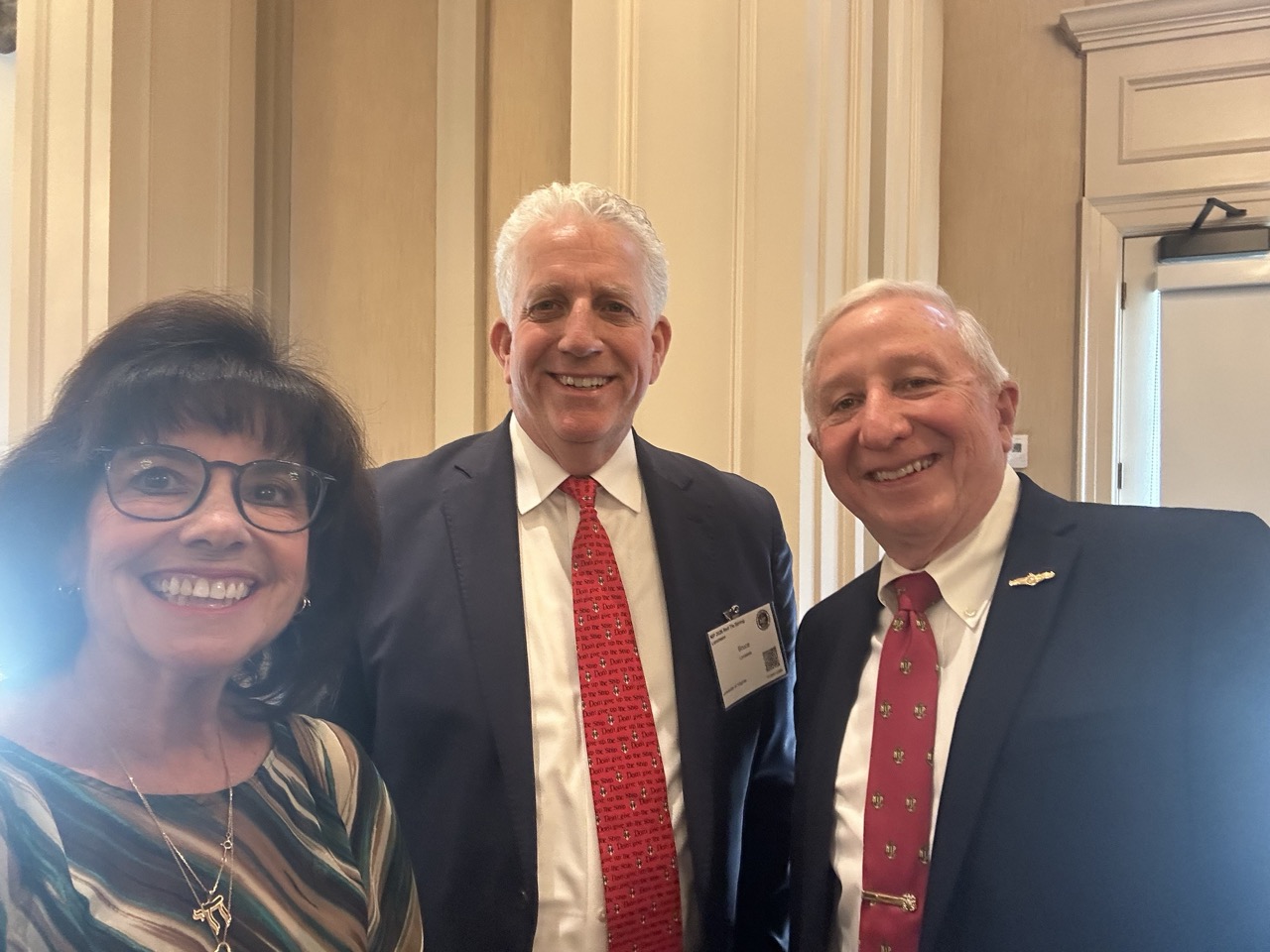
NIP’s annual Red Tie luncheon, held this year on 1 May at the Army Navy Country Club, is always a special time for Naval intelligence professionals and friends to come together and recognize an individual for his or her lifetime achievements and outstanding contributions to our profession. This year’s event was no exception as NIP honored the life and legacy of the late Lieutenant General Vince Stewart. The luncheon was particularly meaningful as Stewart’s wife, Phyllis, flew in from Oklahoma to accept the award on behalf of her husband, and Lieutenant General Jerry Carter, a long-time friend and a mentee of Stewart’s, was the guest speaker.
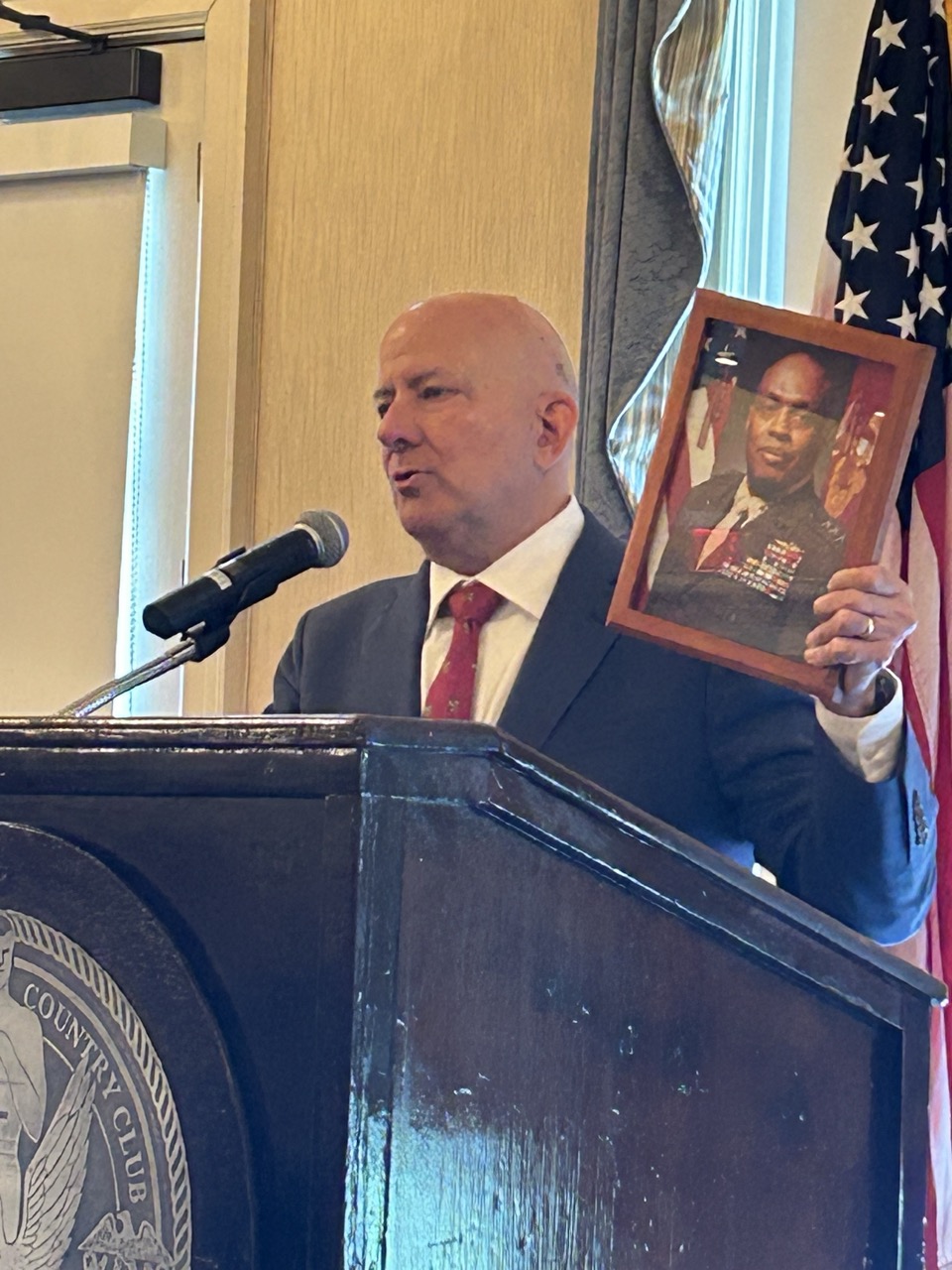
During NIP Chair Vice Admiral (Ret) Bob Sharp’s comments before presenting the Red Tie Award, he reminded the audience that it was three years ago almost to the day that Stewart passed away, days before the Red Tie lunch in 2023; and he held up a framed photo of Stewart that was on display that day. “Vince was one of those people who made everyone around him better, and he left every place he went better than he found it,” Sharp said, calling him a visionary and a trailblazer, a leader of character and a leader of consequence. As Stewart’s award citation aptly states, “There are generations of naval, joint, and coalition intelligence professionals leading our community guided by wisdom passed on by Lieutenant General Stewart. He was a great leader, friend, and human—his legacy lives on in the thousands he has trained, mentored, and coached.”
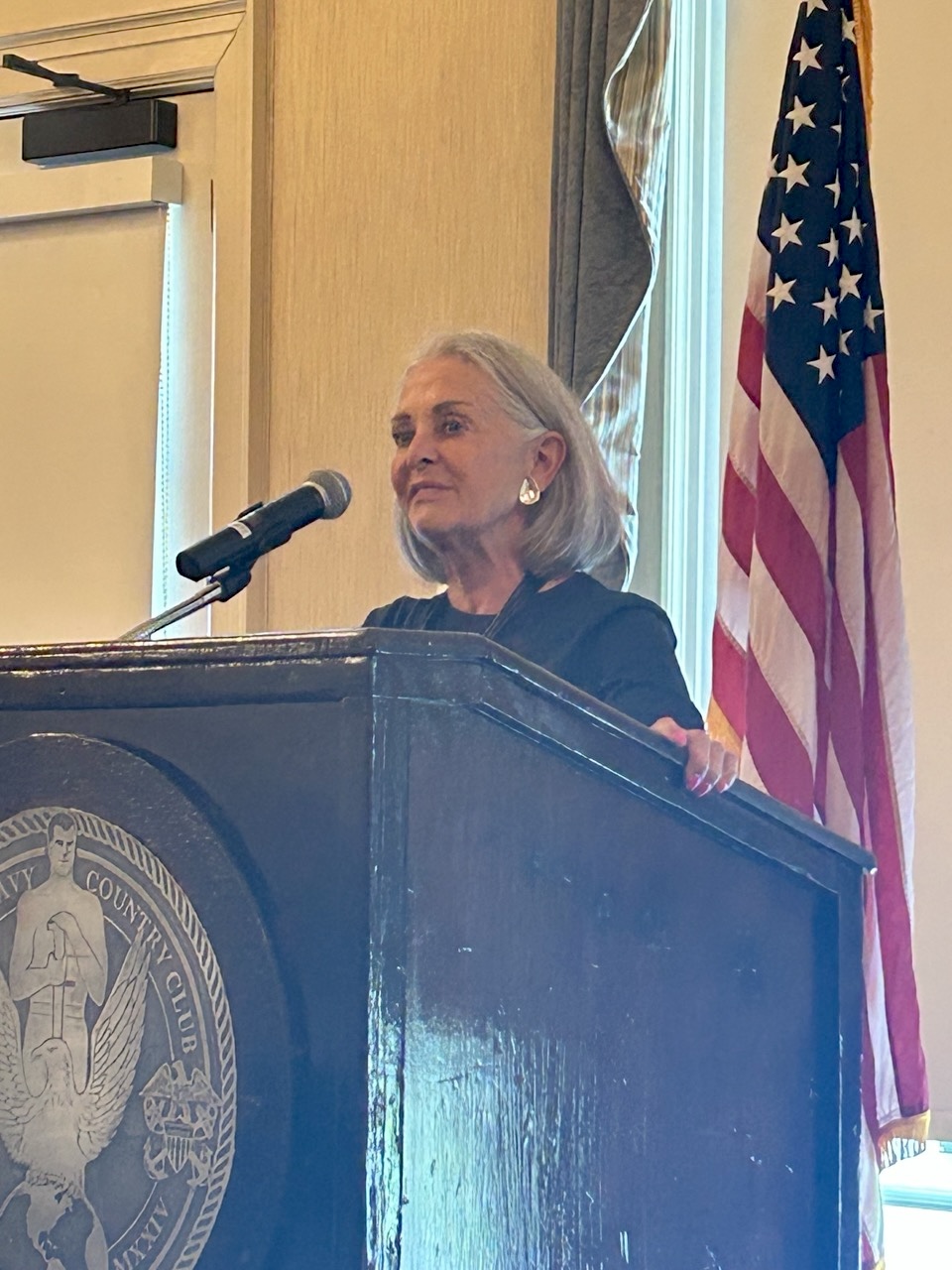
Following the presentation of the Red Tie Award, Phyllis took a few minutes to address the audience, thanking NIP for recognizing her husband. She relayed a heartwarming story about one of her grandchildren, who she says could very well follow in Stewart’s footsteps and become an intelligence officer one day. During the Christmas after Stewart’s death, Phyllis says she continued the “Elf on the Shelf” tradition she had with her grandchildren, only this time the Elf left a note from their grandfather in heaven. The youngest of the children pulled Phyllis aside and said, “You know, Grandma, that writing looked a lot like yours….” Stewart was no doubt smiling from above.
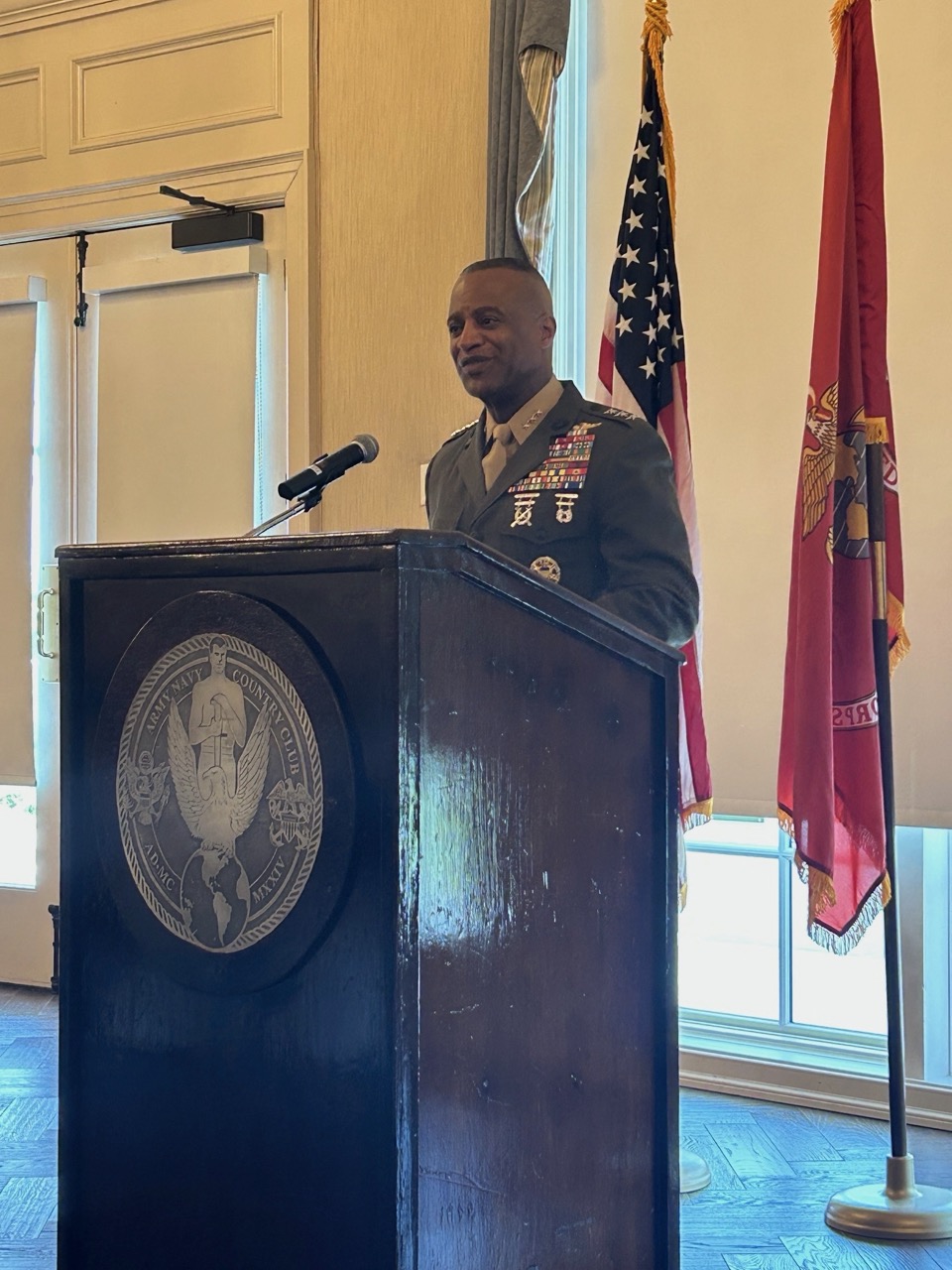
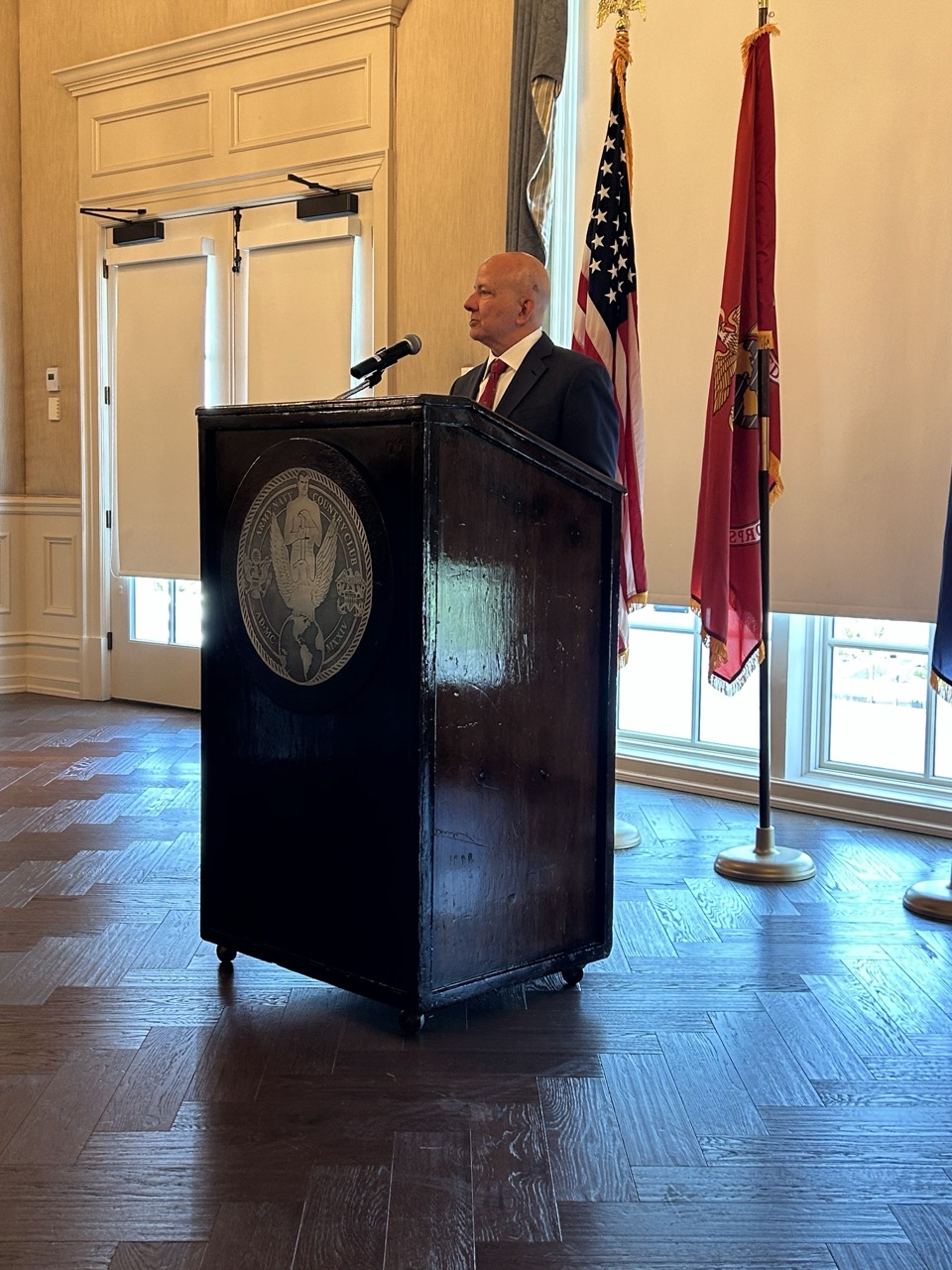
Lieutenant General Carter, former Deputy Commandant for Information (DCI), U.S. Marine Corps and currently the Advisor for Military Affairs for the Director of National Intelligence, took a few moments before his prepared remarks to reflect on Stewart, who he referred to as the “Godfather of the Enterprise,” and recognize Phyllis. “It’s especially meaningful to see Phyllis here today. Your presence reminds us all why this community matters so much, as we continue to remember and honor Vince, General Stewart—someone who meant a great deal to many of us, me included.”
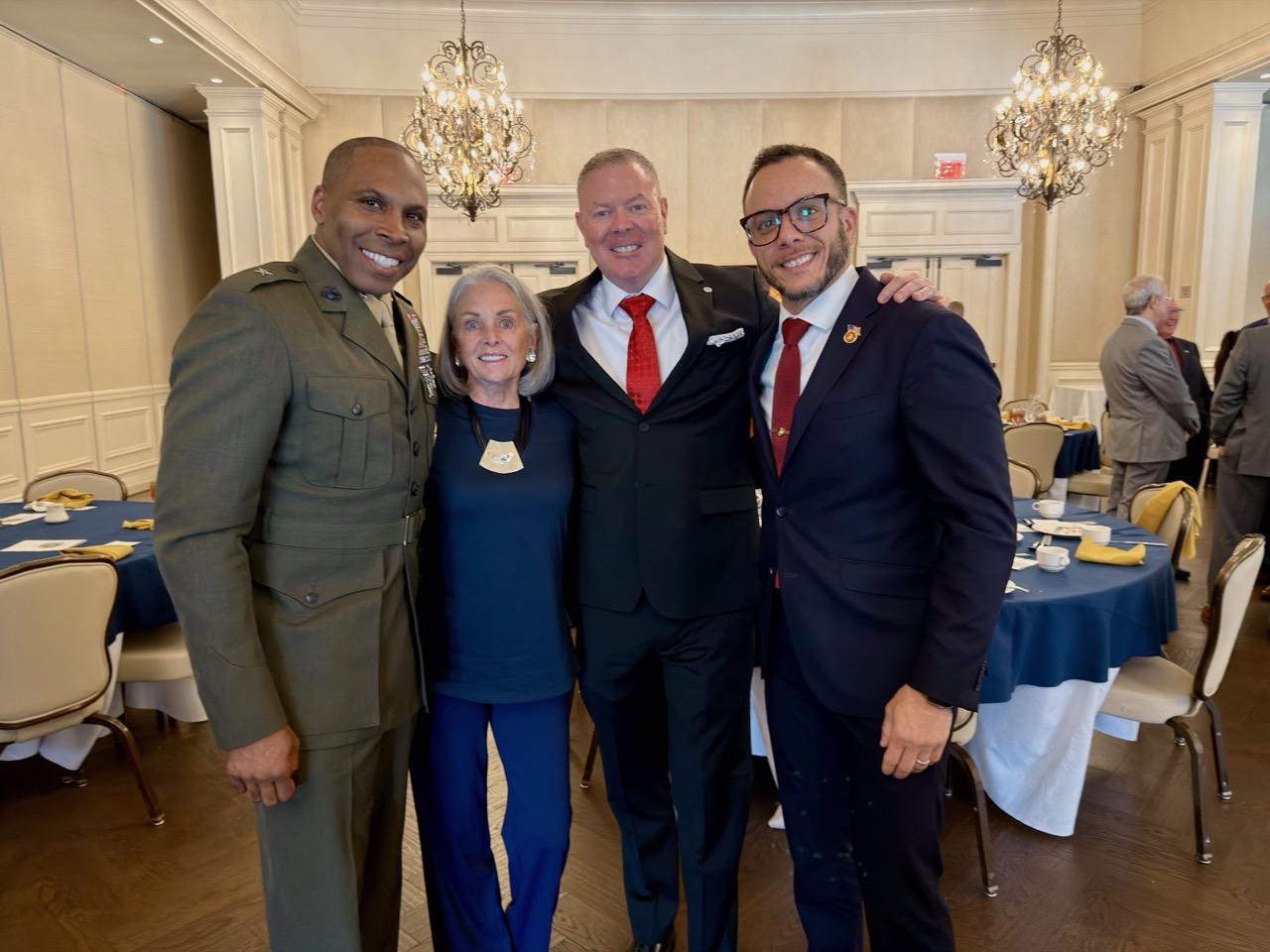
Carter also recognized a special guest at his table, retired Marine Corps Corporal Garrett Jones— a Purple Heart recipient who serves as an extraordinary example of how resilience and a positive attitude can overcome significant obstacles. While deployed to Iraq in July 2007, Garrett suffered multiple severe injuries, to include loss of his leg, when he stepped on an improvised explosive device. After going through 20 surgeries, he began the healing process, and within a year, he eventually became the first servicemember to re-deploy into combat as an amputee. Today he is a valuable member of the intelligence community and helps other wounded servicemembers.
Carter began his remarks by sharing his thoughts on his recent role as DCI, which, he pointed out, is now the Deputy Commandant for Information Warfare. The change in title, he said, “is not cosmetic. It reflects a clear recognition of just how critical the information battle has become in modern warfare.”
Much of Carter’s comments focused on how, in his current and former role, he has had a front row seat to the reality that while the nature of warfare has not changed, the character of warfare has changed; and in this new era where the decisive domain is information, all the services are undertaking the necessary transition from the analog, hardware-driven force many are familiar with to a digitally enabled, globally integrated force. This transition is a “no-fail mission,” Carter, said, that requires a new mindset that treats data as a weapon system, information as maneuver space, and intelligence as a continuous, integrated function rather than a supporting activity. And he noted that we’re moving in the right direction, pointing to recent operations in the SOUTHCOM area of responsibility and Middle East as examples of what that success looks like. He provided an overview of all the ways we’re using information as a weapon to shape the battlespace: taking disparate streams of data and turning them into decision advantage, leveraging advance of artificial intelligence and machine learning, and integrating intelligence more tightly integrated with operations. More specific to the Marine Corps, Carter discussed Force Design and how it is enabling the Marines to be “ready, relevant, and able to operate effectively in the information environment.”
Despite all the progress, he asserted there is still work to do—building more resilience into networks and systems, improving integration across the joint force at scale, and evolving how we acquire and field capabilities.
Most importantly, though, he emphasized the value of people through all of it: “We are equipping the sailor and Marine, we are not manning the equipment. The most important part of our fighting force has always been, and will always be, our people.” As he ended his remarks, he assured the audience that he is incredibly optimistic as he looks to the future—he sees a force that is “adapting, integrating, and becoming more capable every day.” He also added a few things he has learned over time: never to lose sight of speaking truth to power and always pay it forward.
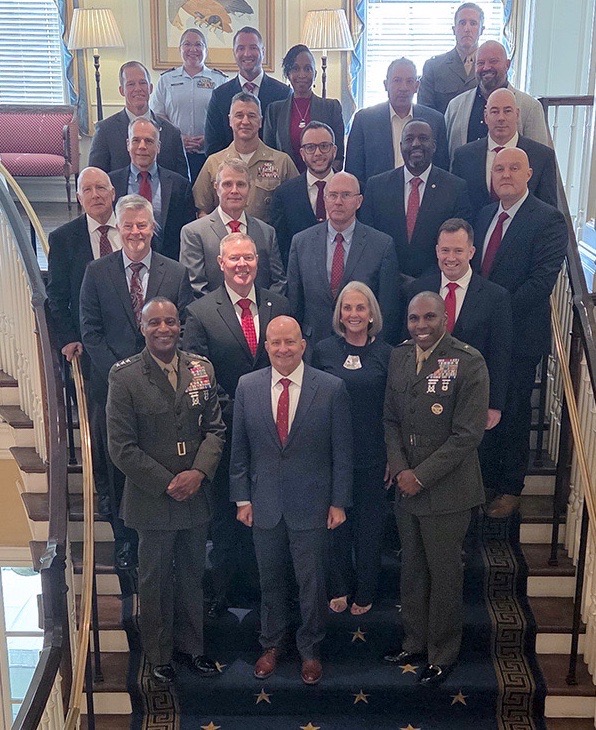
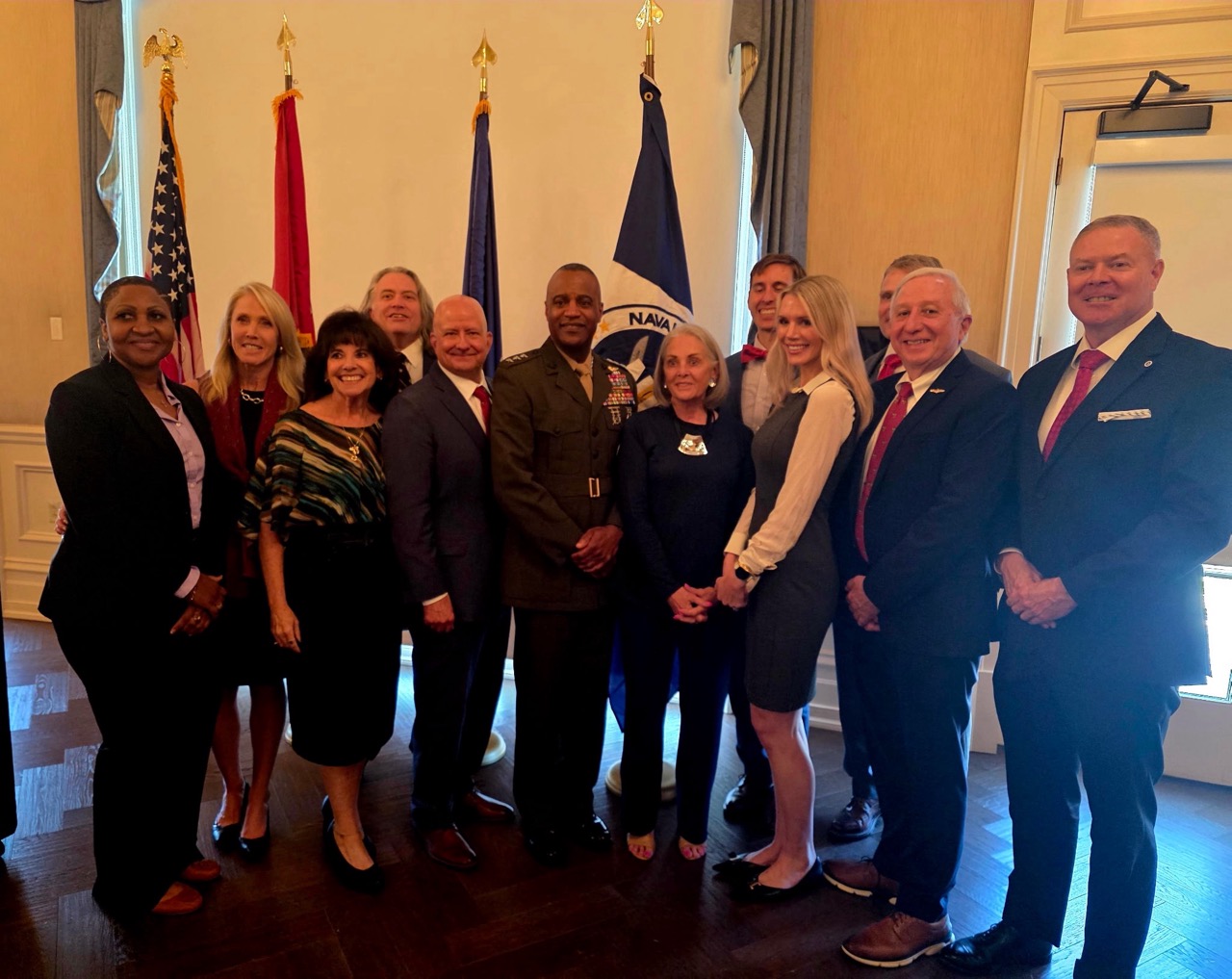
The audience at the lunch was perhaps the most “naval” NIP has ever had, with a strong turnout of Marine Corps intelligence professionals. It was a great opportunity to come together to recognize the incredible leader Vince Stewart was and the legacy he has left behind, to hear powerful words from someone who represents that legacy, and to share in the camaraderie and friendship that makes this Naval Intelligence community special.
CONTACT
Naval Intelligence Professionals
PO Box 11579
Burke, Virginia 22009-1579
CONNECT WITH US!


© 2026 Naval Intelligence Professionals. All rights reserved. | Website design and development by Cat's Eye Design.